As Americans, many of us attended K-12 public schooling and were indoctrinated by the American education system to believe, for example, that Christopher Columbus was a heroic figure. From my experience, I learned that all settlers were great people because they “discovered” and “developed” America. I attended a very small school in a rural town with many other settler descendants, like myself. Anytime that I learned about Native peoples, it was only in the past tense. This commits erasure. The phenomenon of erasure was not something I was familiar with before college, but the public education system plays a huge part in the continual erasure and genocide of Native peoples. Public education curriculum ensures that Native peoples are “of the past,” and not the present, which ensures that erasure continues. The public education system takes advantage of innocent minds by feeding them incorrect history and negative stereotypes about Native peoples. Did your public school have children wear feathered headdresses and bonnets for Thanksgiving? Did they tell you that the “Indians and Pilgrims feasted together,” and had you playing each part? As settler descendant children dressed up in stereotypical costumes we were not only fed a “feast” at our school’s Thanksgiving, but we were also fed lies. When I got to university, I registered for an Indigenous Literature course, and I had no idea what to expect. I didn’t know that it would quite literally change my life. Throughout my time in that course, I began to realize that everything that I was ever taught was incorrect. I wanted to write this post to share my experiences while learning about my own whiteness, and why it is so important to do so.
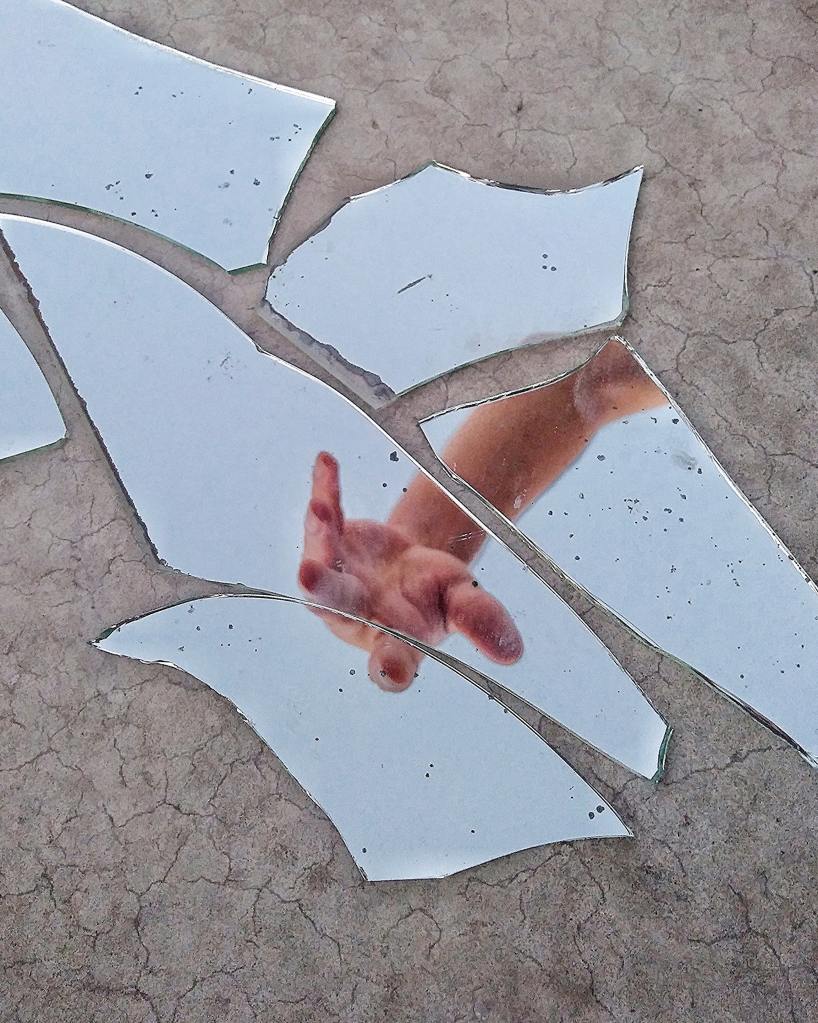
Most important to my re-education was being introduced to many powerful Native authors. One influential author in particular was William Apess, a Pequot ordained Methodist minister, who wrote “An Indian’s Looking-Glass for the White Man.” While reading this essay, I came across the powerful metaphor of “holding a mirror up to whiteness.” I will use this metaphor throughout this post, because it has impacted me greatly, though I didn’t fully understand the magnitude of Apess’ metaphor until I was reading one of Simon J. Ortiz’s poems in from Sand Creek. Ortiz is an Acoma Pueblo poet, and his poetry has changed my life. Ortiz’s inclusion of well known colonists throughout his poetry was the strike to the match. The lines that allowed me to hold a mirror up to my whiteness for the first time and made me look at the “American Dream” more closely were “Consulting axioms / and the dream called America. / Cotton Mather was no fool” (Ortiz, lines 7-9). These three lines stopped me dead in my tracks and forced me to realize I could see myself in Cotton Mather and that I was “no fool for believing in the American Dream.” The American Dream was my privilege just as much as Mather’s, except now, unlike my settler ancestors, I was becoming aware of my own white privilege. The American Dream was very persuasive, and in order for it to be successful, white people needed to steal Native land, among many other heinous acts. Mather is used as a symbol of American “origins” and white people as a whole.
Many white people are ignorant of or choose to ignore the fact that America is stolen land that has erased generations through genocide. My realization of Cotton Mather as a symbol of whiteness created a domino effect, and I began to question almost every component of myself. I was so angry, but I didn’t know who I was exactly angry with. Was it myself? My rural community? My public education? America as a whole? I previously mentioned that I grew up in a rural town, and I was always taught that I should be proud of my whiteness and that white privilege does not exist. But that is so wrong and so untrue. As a settler descendant I have a lot of privilege living on stolen Native land, and not acknowledging that is only perpetuating white supremacy. The only way that I can describe the realization of your own whiteness is by comparing it to a bomb. First you have the ignition of the fuse, which is when you slowly start to digest that not being able to view your whiteness continues to perpetuate harmful ideologies about Native peoples; this happens slowly. The more that you realize, the more the fuse burns, and eventually it will explode. When you are finally able to “hold a mirror up to your whiteness,” it feels like little pieces of you have been torn apart, especially when you realize that you have been ignorant to the fact that you were taught to throw gas on the colonial fire that blazes in America. What I have come to realize now, is that after the initial explosion, you are able to pick through the small pieces of yourself, and you have the chance to replace the bad pieces with something better. Unlearning erasure and colonialism is an ongoing process, especially if that is all you were taught. Being able to finally view your whiteness, like myself, not only ensures that you are an ally to all Native communities, but it also ensures that instead of feeding the colonial fire, you are now acting as an extinguisher.
I have done a lot of self reflection since beginning to see my own whiteness. I believe that I have become more empathetic and more critical when learning new information about America, but also more outspoken. I will never stop teaching the truth about America, no matter the backlash that I receive from the extreme patriotic individuals from my rural community. I realize that people from my hometown wholeheartedly believe in the “axioms that consult America,” and fully embody the statement that Ortiz was making, as they don’t know, or choose to ignore, everything that America has negatively prompted for Native peoples. Unlearning things that you have been told to believe is not easy, but fighting for an equitable and just society should be of utmost importance. It is for me. There is no perfect word to describe the emotion that I feel knowing that I was fed dangerous lies about my whiteness. I have often beat myself up over the fact that I was condoning white supremacy. I now view religion and the public education system under a different light. How can someone claim that they have devoted their life to Christianity, and then use it to justify being racist? Aren’t devout Christians supposed to love and accept everyone? How can people write a curriculum for public education and allow it to perpetuate harmful ideas about Native peoples? Shouldn’t we be teaching our children the truth? Why is America still okay with committing cultural genocide centuries later?
If a person similar to who I used to be, oblivious to the absolute horrors that America hides, and blind to their own whiteness, is reading this, I hope that this post can act as the strike to your match – just like Ortiz and Apess were to mine. Going forward, I hope that this post creates a discourse for people like those of my rural community: extremely patriotic, devoutly religious, and too trusting in our colonial founding fathers. If you move your pride over, for just one moment, you might be able to get a glimpse of your own whiteness, and see the importance that realization holds. I have grown as a person since viewing my own whiteness, and using that realization to understand different perspectives in America has allowed me to express a level of empathy that I didn’t know was possible. My life goal has always been to positively impact society, but I never knew how I would actually achieve that goal. Fighting for an inclusive and just society while shutting down colonial narratives that still exist in the twenty-first century is what compels me the most, and being able to see my own whiteness has provided me with the opportunity to do so.
Chloe’s Recommended Reading:
- William Apess, (1833) “An Indian’s Looking-Glass for the White Man”
- Simon J. Ortiz, (2000) from Sand Creek.
- Louise Erdrich, (2012) The Round House
Author Bio:
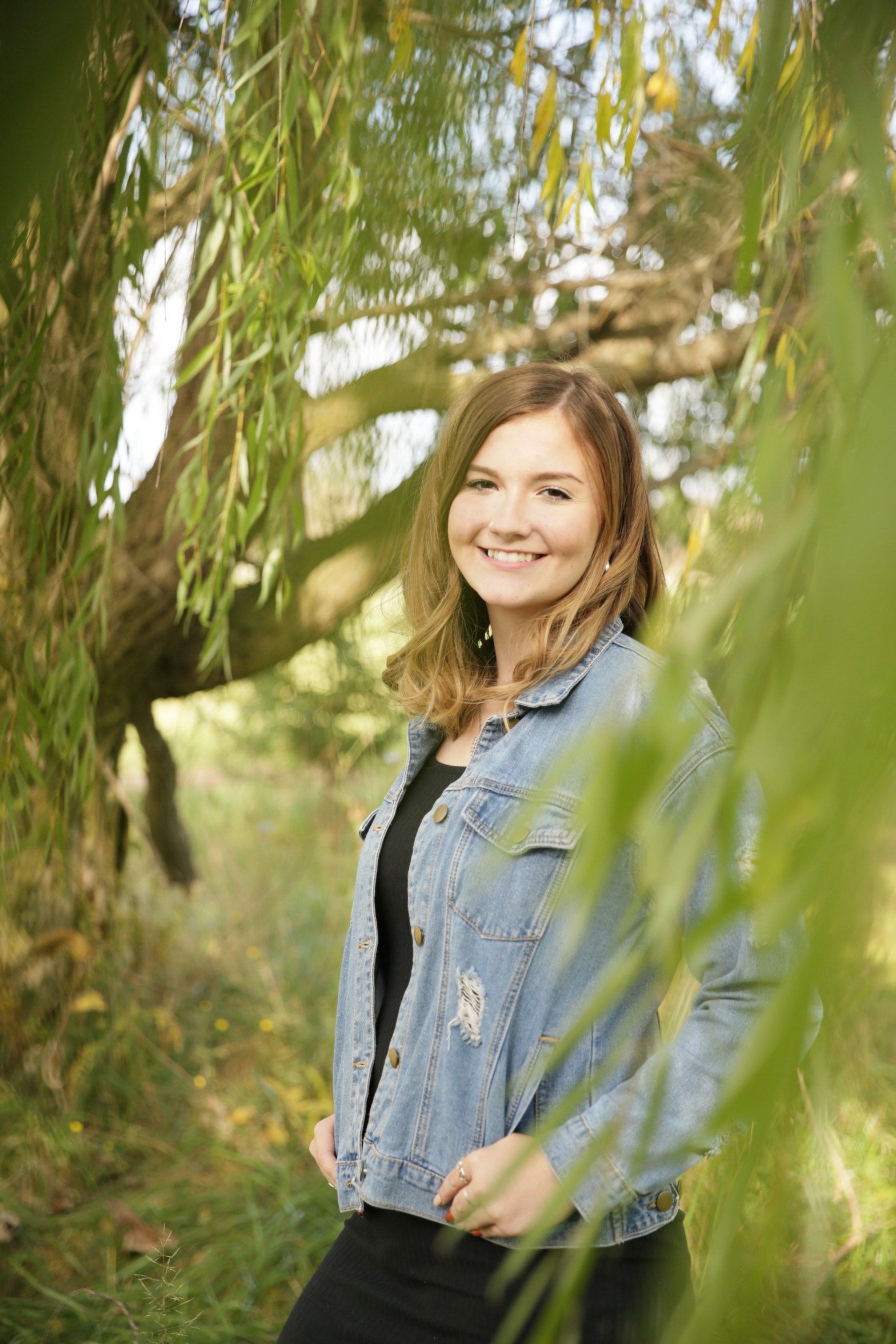
My name is Chloe Lebow, and I come from a small town in Southeast Michigan. I graduated with my Associate Degree in Arts from St. Clair County Community College in 2022, and am now pursuing my Bachelor’s in English at Oakland University. I plan to get my Master’s in English and work as an educator at the college level to continue the fight for a more inclusive and equitable society. I enjoy spending time in the garden and traveling to different places in Michigan.

 Gidinawemaaganinaanig: Endazhigiyang
Thank you for this powerful post, Chloe. I was deeply moved by your reflections!
LikeLike